Showing posts with label Tom Hollander. Show all posts

Monday, 25 July 2022

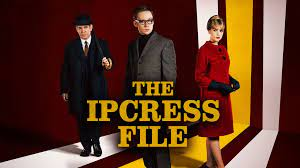
The IPCRESS File - ITV review


The IPCRESS File was one of the great spy novels of the 1960s. It's a book often bracketed with The Spy Who Came In From The Cold, but people often forget that Len Deighton's novel came first. It was the book that first made Len's name and it became an iconic Sixties film, starring Michael Caine as Harry Palmer (the protagonist whose name is not actually mentioned in the book). Now it has been made into a TV series in six parts, scripted by John Hodge, with Joe Cole as Harry.

Some critics have questioned the rationale for a new version of the story, but after a gap of more than half a century, it seems to me to be perfectly reasonable to come up with a new take on this espionage classic. The real question is: is it any good? After all, it has to be measured against the high standards of novel and film.

At first I wasn't sure about this version. As I've often said, the desire that TV people have to turn stories into six episodes when two, three, or four episodes often mean a tighter story, is regrettable. The first episode left me unimpressed, but I stayed with it and was rewarded by a steady improvement. The last couple of episodes in particular are excellent. An added bonus was that much location shooting was done in Liverpool - and in Great Budworth, the Cheshire village where I first discovered Agatha Christie! I was also amused by the fact that Agatha Christie's The Clocks features, although no real effort was made to make anything of it in the script.

Joe Cole does a good job; his performance is more nuanced than Michael Caine's, although less memorable. Lucy Boynton keeps her emotions in check as Jean Courtney, and the result is a bit uninvolving, but Tom Hollander is excellent as Dalby. Special mention for Anastasia Hille, who is quite brilliant in a supporting role. So, despite some padding in the script, this one is definitely worth watching. Alas, the music is nothing like as good as John Barry's soundtrack for the film, but that was probably inevitable! 


Wednesday, 6 February 2019

Gosford Park - DVD review

Robert Altman's acclaimed and award-winning 2001 film Gosford Park is a whodunit that isn't really a whodunit. The first time I watched it, rather naively I focused on the whodunit aspect of the story and the plot, and found the film enjoyable but not quite the masterpiece it was supposed to be. Now I've taken another look at the DVD version, which includes some useful bonus features, and I'm even more impressed than I was originally.

Really, Altman took the idea of a Golden Age whodunit in a country house setting and used it as a context for a story about the class divide in the age of masters and servants. More or less everything is seen from the perspective of "below stairs", and the amateur detective work, such as it is, is undertaken by a servant. There's a lot of humour in Julian Fellowes' script, and there are many nice observations. I've never watched Downton Abbey, but there's no doubt he's a talented writer.

There is a large ensemble cast, and one of the doubts I had about the film originally is that this means that many of the characters are undeveloped. A large cast also makes it difficult to care about many of the suspects, and the plot of the story isn't its strong point, though there is a pleasing and inventive use of tropes such as the body in the library, the double killing, and impersonation.  Stephen Fry's police inspector is amusing but buffoonish, perhaps excessively so.

As for that cast - wow! Michael Gambon, Maggie Smith (in brilliantly waspish form as the Countess of Trentham), Kristin Scott Thomas, Charles Dance, Tom Hollander, Geraldine Somerville, Jeremy Northam (as Ivor Novello!), Helen Mirren, Kelly Macdonald, Laurence Fox, Alan Bates, Clive Owen, Derek Jacobi, Emily Watson, Eileen Atkins, Richard E. Grant...There's a lot of pleasure to be had from simply watching such stars in action. I can recommend this DVD; it's definitely a film worth watching more than once.

Sunday, 27 March 2016

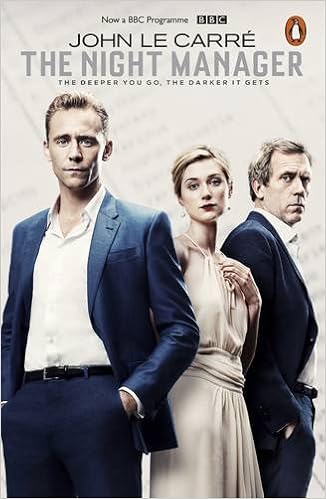
The Night Manager - spoiler-free reflections on a TV classic


The Night Manager, the sixth and final episode of which aired on BBC 1 this evening, is one of the finest British television series I've seen in a long while. In recent years I can only think of Broadchurch (the first series, definitely not the second) and Happy Valley which were similarly compelling. In contrast to those two series, The Night Manager was based on a novel,. It was written by the legendary John Le Carre, and I haven't read it, although evidently the process of updating the story to the present and for the screen has resulted in many changes.

Why has the story hooked me, and millions of others? Well, first of all, it offers a gripping blend of plot and character. Jonathan Pine, the enigmatic hotel manager with a military past, becomes involved with a beautiful woman who falls foul of a fabulously wealthy villain called Roper. When she is murdered, Pine is jolted out of his apparently comfortable lifestyle,and is persuaded by a British secret agent, played by Olivia Colman, to infiltrate Roper's organisation and bring him down.

That' s the basic set-up, but the detail is full of complications that are so skilfully handled. Part of the fascination of the story for TV viewers like me is surely the glimpse into the lifestyles of absurdly rich people such as Roper and his circle. They move from one exotic spot to another, flunkies cater to their every whim. Sounds great, but there's a price to be paid. I was reminded vividly of an exceptionally rich person I once came across. He lived in a fantastic mansion, which I found fascinating to visit, and had a glamorous girlfriend and a private yacht and plane. But the mansion had a panic room where they could hide from kidnappers, and military guards at the gate...

Back to The Night Manager. The relationships, for example between Colman and her colleagues,and between Hiddleston and Roper's lover, are done in enough depth to make us care about the characters,and about what happens to them. I was glad that the final episode matched the quality of the preceding five. One brief but memorable scene did owe something to The Long Good Friday, but without in any way compromising the originality of the storyline.

A script so good deserved great acting, and that's exactly what was supplied by Tom Hiddleston, Tom Hollander, and Elizabeth Debicki. I wasn't quite sure at first about Hugh Laurie as Roper; was he credibly nasty enough to play the part? My misgivings proved needless Laurie presented a character with great superficial charm, a caring father who has people killed for profit; he was at his best in the final episode, when his true nature came to the surface. Hollander was brilliantly creepy as Corky, and Hiddleston has really made a name for himself with this show. I wasn't sure before I started watching The Night Manager whether I'd love it. But I did,- I really did.


Wednesday, 26 August 2015

The Riot Club - film review

The Riot Club is a film from last year, based on Laura Wade's successful play Posh. Rather like The History Boys, it has an ensemble cast of mainly young actors, including the sons of those fine actors Jeremy Irons and Edward Fox. Tom Hollander, who has a fairly minor role as a sinister MP (is there any other kind?) is perhaps the best-known name, but the quality of the acting is consistently high.

The eponymous club has historic origins and is based in Oxford University. In essence, it's a collection of ten rich, posh young men with a taste for drink and debauchery. There's a disclaimer in the credits, but it doesn't take a great detective to suspect that Wade is having a swipe at the Bullingdon Club. A pretty easy target to aim at, it has to be said.

This is a story about the abuse of privilege, but it's perhaps most impressive if seen as a story about gang culture. The members of the Riot Club behave in a way that is offensive and deeply unpleasant, just like members of other gangs. In this story two new members are recruited, and a dinner is organised at a gastro-pub far distant from Oxford, because the Riot Club has been banned from everywhere nearer. As the lads become more and more drunk, things turn increasingly, and very predictably, nasty.

This is a well-made and, for all its lack of subtlety, extremely watchable film. I enjoyed it, although I couldn't identify with it in the way I could with some aspects of The History Boys. I felt that the script panders to prejudices - possibly including my own prejudices, given that, although I studied at Oxford, I was neither posh nor rich, and nor were my friends. That said, it makes some good points, as well as facile ones. I did wonder if young Irons and Fox felt slightly uncomfortable about some of the criticism of inherited privilege. But there's no reason why they should. They are clearly very good actors, and it seems likely that they will have highly successful careers..