Over the years, I've somehow managed to miss The Anderson Tapes, a 1971 film directed by the gifted Sidney Lumet, and based on a novel by Lawrence Sanders. It's a heist movie starring Sean Connery at the peak of his powers, and I've long been familiar with the excellent theme tune by Quincy Jones. Finally, I managed to catch up with it, thanks to the admirable Talking Pictures TV.
It's apparent that Lumet was trying to do something more than direct a straightforward film about a robbery. This is a story, in part, about covert surveillance, and it pre-dates The Conversation, which is my favourite movie about surveillance, a genuine masterpiece. At the start of the film, Connery is released from prison. He is an angry man, who immediately reunites with his girlfriend, Dyan Cannon, who is being maintained by another lover in a posh apartment block. Connery decides to rob her fellow residents.
The trouble is that this is a two-hour film with barely ninety minutes of material. Lumet's approach may have been cutting-edge in its day, but it seems to me to have dated, and this film is much less effective, in my opinion, than some of his other work. I am a Connery fan, but I never warmed to his character, and the heist seemed to me to be hopelessly protracted, and so obviously doomed to failure that tension faded.
Even Quincy Jones' soundtrack seems, to a modern ear, to be intrusive and occasionally a bit irksome, despite the quality of that theme. The ending is meant to be ironic, but I'm afraid that by that stage, I didn't really care too much. You'll have gathered that I was disappointed by this one. Maybe it's a case of having had expectations that were too high. But in my opinion, it's nothing like as good as The Conversation.
Monday, 13 May 2019

Friday, 10 May 2019
Forgotten Book - The Accident of Robert Luman
The Accident of Robert Luman was published in 1988. The author, David Fletcher (a pen-name for Dulan Barber) died in the same year. He was only 48. Fletcher's tragically early death probably explains why his work has been neglected in recent years. Another reason for that neglect is that he didn't create a major series character (although this novel introduces a cop called DS Jolley, who appeared in Fletcher's last two novels). He was a well-regarded novelist in his day, but I'm pretty sure that he'd have developed further had he lived, and he might well have become a doyen of the genre.
This novel is interesting on several levels. First, it's a "whowasdunin". An introductory section reveals that a murder of extraordinary savagery has been committed - but we don't know the identity of the victim. This aspect of the story is intriguing, though it's not Fletcher's main focus - and I think it's fair to say that the victim isn't characterised in great depth, a weakness of the story.
Second, it's a novel of psychological suspense, a gripping tale which reads in some respects like an updating for the 80s of the work that John Bingham and Julian Symons were doing twenty or thirty years earlier. Fletcher builds the tension as he shows a young man being trapped in a web of suspicion. In fact, in some respects, this book is a development from his previous novel, On Suspicion - but it's a superior work.
And one of the reasons why it's superior is that Fletcher presents a very interesting picture of a brain-damaged character, Robert Luman himself. I'm not sure that I can think of an earlier, more convincing portrayal of a character with a severe mental disability - if you can, please let me know! In recent years, several authors have tackled a comparable challenge with great success: one thinks of books like Elizabeth is Missing and The Curious Incident of the Dog in the Night-Time. Fletcher's novel is not quite as impressive as either of those two books, but I thought it a highly readable piece of work.
Wednesday, 8 May 2019
Kiss Tomorrow Goodbye - 1950 film review
I confess that I've never been much of a James Cagney fan, but I'm having to revise my views now that I've watched Kiss Tomorrow Goodbye, in which he stars as the ruthless gangster Ralph Cotter. The film dates from 1950 and was based on a novel of the same name by Horace McCoy, who is best known as the author of the superb They Shoot Horses, Don't They?
The film opens with a trial scene in which a hammy prosecution lawyer rants about the evil of the accused men (and one woman) who are in the dock. But Cotter, we learn, is there "in spirit" only. We then flash back to a time when Cotter was in prison. He is sprung from jail, but shoots his accomplice, only to be rescued by the accomplice's sister, Holiday Carleton. She's played by Barbara Payton, a glamorous blonde in the finest film noir tradition whose real life story (including four husbands, drink and drug addiction, prostitution, and death at the age of 39) was utterly tragic. This performance shows that she really could act, and what happened to her afterwards is so very sad.
Cotter seduces Holiday, and soon outsmarts a pair of crooked cops with the aid of a dodgy lawyer. Complications ensue when he meets another woman, Margaret Dobson (Helena Carter) whose father is as rich as he is ruthless. Cotter, needless to say, finds temptation impossible to resist. Carter's performance is also a good one, and it's interesting to contrast her fate with Payton's; she quit the movie business after marrying for the second time, in 1953. The world lost a good actor, but she seems to have had a happy life; unlike Payton's, it wasn't a life in the merciless public spotlight.
The screenplay is by Harry Brown, and it includes some very snappy dialogue. The action zings along, although I'm not sure why he bothered with the courtroom framing scenes; I'm not convinced they were necessary or helpful. The film was criticised in some quarters for glamorising crime, but I don't think it does. Cagney is, I must say, very convincing; it's a great performance from him. And the film as a whole is well worth watching.
Monday, 6 May 2019
Domino Island by Desmond Bagley
Domino Island is the new Desmond Bagley novel, with official publication this week. But wait! I hear you exclaim. Didn't Desmond die way back in 1983? Well, yes, he did. But this book has never been published before. It was found in his archived papers not long ago, and Harper Collins have hastened to bring it into the public domain.
I have to say that I love the idea of discovering unpublished novels by authors of repute. I've read one or two, and I've found them absolutely fascinating. So generally speaking, I'm all in favour of their being published. But of course, just as sometimes there is a good reason why forgotten books have been forgotten, so there is sometimes a very good reason why an unpublished book has never seen the light of day. The quality may well be inferior, though sometimes there are major compensations in the way that the story casts light on the author's work or life.
In this case, Bagley fans shouldn't be worried. Domino Island is an interesting and lively story, well worth reading. A note in the book explains the background to its non-appearance - Bagley became involved with writing another novel, and this one seems to have fallen by the wayside. A bit mysterious, but there you are. The story dates from 1972, but has been "curated" by a Bagley fan and writer, Michael Davies, who has smoothed out the various rough edges you might find in a first draft. He deserves congratulation, as he seems to have done a very good job.
The story is set on a fictitious Caribbean island, and the key question for Bill Kemp, a consultant contracted to a big insurance company, is how wealthy David Salton came to die. Is there something suspicious about it? Bagley set about constructing a whodunit in the classic tradition. but as he admitted to his publisher, his instinct for action and adventure kept breaking in. He called it Because Salton Died: I think Domino Island is a much better title. The hybrid of mystery and thriller works pretty well, in my opinion. I found the revelation of the culprit a genuine surprise (though I'm not sure there were many clues) although the final section, devoted to thrills rather than a mystery, seems to me to be over-long.
Overall, I enjoyed this story as a fast-paced entertainment. I inherited my enthusiasm for Bagley's writing from my father, who was a big fan, and although I never met Bagley, I did meet his widow Joan, a very likeable woman. I am sure that both my Dad and Joan would be delighted to see this book surface at long last, and I hope it will please not only Bagley's existing fans, but perhaps also younger readers who may not be familiar with his work.
Friday, 3 May 2019
Forgotten Book - Shock!
Shock!, a novel by Virgil Markham, was first published by Collins Crime Club in 1930. The title is exuberantly melodramatic; in the US, the book was called The Black Door. But the splendid sub-title is as prolix as the title is concise, and reads: "The Mystery of the Fate of Sir Anthony Veryan's Heirs in Kestrel's Eyrie Castle near the Coast of Wales". A sub-sub title adds: "Now set down from information supplied by the principal surviving actors, and witnesses". Wow!
One delightful feature of my copy is that it contains a massive pull-out folded family tree of the descendants of Horace Veryan. Some addenda to the tree, although printed, appear to be handwritten, bringing the toll of fatalities in the family up to date. And there is more! A map of the local area, featuring St David's and Ramsey Island, is included. And there are plans of the ground and first floors of Kestrel's Eyrie.
The viewpoint character is Tom Stapleton, an American (as was Markham) who is a member of the seemingly cursed Veryan family, and who is in Wales, hoping to see Sir Anthony Veryan, recently incapacitated following a murderous attack. He finds himself embroiled in a complicated mystery in the finest Golden Age tradition. Markham has a nice plot twist up his sleeve, although I anticipated what he was planning to reveal, despite finding myself bogged down by the minutiae of the story.
This is an enjoyable vintage mystery, not as good as Markham's first book (also set in Wales), Death in the Dusk, but quite entertaining as long as one reads it quickly, and doesn't pause to quibble about details. My copy once belonged to Dorothy L. Sayers, who obligingly signed it. It came from the late Bob Adey's collection, and although it's by no means a masterpiece, it has fired my interest in Ramsey Island. I've visited St David's, long ago, but not Ramsey. It's an omission I really must repair.
Tuesday, 30 April 2019
Mr Denning Drives North - 1951 film review
It's a long time since I read Alec Coppel's novel Mr Denning Drives North, but I remembered it as a decent suspense story, and this prompted me to watch the film version, made in 1951, a couple of years after the book appeared. Coppel was a capable writer, with a particular gift for dialogue and building tension. He was one of the writers of Vertigo, one of the finest of all crime films - some would say the finest.
The protagonist is played by John Mills, who as ever is a thoroughly decent Englishman. He's well off, happily married, and has an attractive daughter. But at the start of the film, he's plagued by nightmares, and it appears that he has a guilty conscience. It's soon clear that he's implicated in a murder case, and before long he confesses the truth to his wife, played by Phyllis Calvert.
His daughter had fallen for a loathsome chap, played by Herbert Lom, and Denning wanted to buy off the blackguard. He persuades him to write a letter breaking off the relationship, on payment of £500, but when he feels that his daughter's honour is insulted, he hits the chap, who falls on the hearth and dies. Manslaughter rather than murder, I'd have thought, but our hero makes the first of several extremely foolish decisions when he decides to cover up the crime.
He doesn't actually drive all that far north to dispose of the corpse; the southern reaches of the Home Counties, by the look of things. But the plot thickens when the body disappears. Denning continues to behave so foolishly that I found it rather difficult to root for him, but I did admire the way in which Coppel piled on the complications. It's a crafty story, and the film benefits from a good cast, with Wilfred Hyde White especially entertaining as a mortuary attendant. Bernard Lee plays a good natured cop, and Sam Wanamaker is a young American patents lawyer who falls for Denning's daughter and unwittingly does his utmost to bring Denning's crime to the attention of the authorities. It's pretty good entertainment.
Monday, 29 April 2019
Body Heat - 1981 film

Over the years, I've mentioned Lawrence Kasdan's 1981 film Body Heat numerous times on this blog, but I've never discussed it in much detail. Time to put that right, because it is, quite simply, my favourite crime film. I first saw it at the cinema in Leicester Square shortly after its release. I was impressed, and despite knowing what happens, I've enjoyed watching it several times since.
Body Heat is in the tradition of that great film (and book) Double Indemnity. That is, it's the story of a charming but weak man who falls for a femme fatale with an inconvenient husband. Some critics have taken the view that Body Heat is a mere act of homage, but although I am a great admirer of Double Indemnity, I think that Kasdan takes the central idea and theme and makes a truly distinctive film of his own, a film of real and lasting quality.
Everything about it is right. There isn't a wasted word in the script, and the film is visually alluring, with the oppressive heat of Florida's coast captured tellingly. And the brilliant score by John Barry is superbly atmospheric. Barry won five Oscars and also composed the definitive James Bond soundtracks, but I don't think this gifted musician did anything much better than Body Heat.
And then there is the acting. William Hurt is fantastic as the likeable but sleazy lawyer Ned Racine, whose incompetence at his job plays a crucial part in the very clever plot. Kathleen Turner made her name in this film, and although some critics have been rather dismissive of her acting skills, I think she gives a terrifically well-judged performance. You can really believe in Ned's obsession about her. The supporting cast, including Mickey Rourke, Ted Danson, and J.A. Preston, is exceptionally good.
What's not to like? If you're a crime fan, and you haven't seen Body Heat, you really do have a treat in store.
Friday, 26 April 2019
Forgotten Book - The Women of Peasenhall
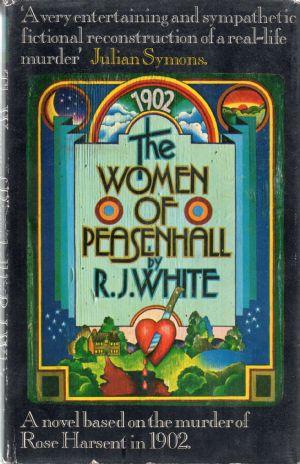
A remarkable number of crime novels have been based, directly or indirectly, on real life criminal cases, and The Women of Peasenhall by R.J. White is an example. The novel was published by Macmillan in 1969, and earned high praise (emblazoned on the front cover) from Julian Symons, no less. The book was White's second to be based on a true crime. His prize-winning The Smartest Grave, published eight years earlier, was inspired by the Moat Farm Murder, and introduced the rather likeable Inspector Brock, who returns here.
Reginald James White came to crime writing late in life, and this book appeared only a couple of years before his death. He was a Fellow of Downing College, Cambridge, and his subject was history. He published several well-regarded history books, and his erudition is certainly on display here. Mind you, there is one howler - Brock's wife refers to the actress Gladys Cooper, whose acting career did not begin until a few years after the events of the story. Ooops. But it's reassuring, I tend to think, to see that even the most learned authors can get things wrong - as we all do from time to time.
The book is based on the unsolved murder of Rose Harsent in a remote Suffolk village in 1902. The case is something of a classic. The same man, William Gardiner, was tried for the murder twice, but not convicted, and lived for almost another forty years. White captures the strange village atmosphere pretty well, I think, and introduces us to the word "proxymater" - which means a woman who has sex with a man to keep him happy while his wife is pregnant; we are a long way from contemporary mores here.
White comes up with an intriguing explanation of the crime, but the book is a rather odd one, elliptically told, and one gift he did not have was that of building tension and suspense. It's a short book, but still moves rather slowly. A lesbian sub-plot is never developed, and we don't get a real sense of the victim's personality, while the female character who clearly interests White the most is sketched in a rather incomplete way. White managed to interest me in the Peasenhall puzzle and I liked his book but felt he could have improved it by working on it more.
Wednesday, 24 April 2019
The End of an Era

My spell as Chair of the Crime Writers' Association was one I found fascinating and enjoyable, though inevitably it did take up a lot of time. But it gave me deeper insight into the workings of the crime writing world and also the issues facing crime writers at a time of much change in the publishing industry. I've been a member of the CWA for more than 30 years, and I've gained a great deal from my membership. So trying to build on the work of my predecessors also afforded an opportunity to give something back. As well as the chance of consuming the occasional CWA cupcake...

I'm not a natural "committee" person, and I've always been aware that committees are not always effective; in my working life I've also come across many disputes in voluntary and not-for-profit bodies. However, I did find that my apprenticeship as a member of the CWA committee, or board of directors, to be more accurate, under the chairmanship of Peter James, Alison Joseph, and Len Tyler, was very helpful in enabling me to get a clearer understanding of the way the organisation works, and of its potential.
My over-riding aim was to build on the fact that the membership of the CWA has been growing impressively for a number of years, and help to refashion the infrastructure of the organisation. A lot of this sort of thing is unglamorous - sorting out the finances, updating the legal constitution, managing the paid agencies who carry out various projects- but essential. My message to members was that we had to be business-like, because that was the only way to ensure that a large and growing organisation could serve its members effectively. Avoiding increases in member subscriptions while developing an ever wider range of member benefits seemed to me to be crucial. And also, one has to get across the message about those benefits, and to communicate effectively with people who read, or might want to read, members' books.
So rather than having numerous lengthy board meetings (my experience of partners' meetings in a law firm has irrevocably turned me off the idea of long meetings and endless going round in circles) I tried to develop a way of working in which a wide and expanding range of individuals undertook specific projects, with sound admin and financial management in the background. So the CWA now has, among other things, three Libraries Champions, two Festival Liaison Officers, a Booksellers' Champion, a Publishers' Liaison Officer, and a number of other people doing invaluable work of various kinds - I'm especially proud of the work we've started on supporting writers who face mental health challenges.
The Board members, and the admirable Secretary Dea Parkin, proved wonderfully supportive, and the way they dealt with the occasional tricky issue which arose was a model of sensible and constructive conduct. I was also delighted by the way the membership as a whole reacted, understanding the need to make changes while retaining the ethos that has made the CWA so cohesive over the past 65 years.
Of course, there are some things which I'd like to have done which I never quite managed, not least visiting each of the regional CWA chapters (though I did get to several of them), but I'm delighted that my elected successor is Linda Stratmann, someone who will bring her own ideas and energy to benefit an organisation which does seem to me to be going from strength to strength. I've handed over to her, as is the custom, the Creasey Bell (see top photo) which has resided in my house since early 2017, and I wish her all the very best.
As it turns out, I'm the only person who has served as CWA Chair and Detection Club President at the same time, and I also became the longest-serving Chair of the CWA since our founder, John Creasey, back in the 1950s. So it's definitely time to step aside and get some more writing done. But I'm going to continue to be involved with the CWA, not least as anthologist and archivist. And I'm very glad to belong to such a thriving and forward-looking organisation.
Bonnie and Clyde - 1967 film review
I'm more than half a century late, which even by my standards is exceptionally tardy, but I've finally got round to watching Bonnie and Clyde, the highly successful movie starring Warren Beatty and Faye Dunaway which (among other things) inspired a song by Georgie Fame. The director was Arthur Penn, whom I know best as director of a rather good crime film, Night Moves.
It was a historical film, set in 1934, and it's a tale of two outlaws. There are some similarities to Butch Cassidy and the Sundance Kid, which came along soon afterwards, although the latter is more of a comedy, and has a superior soundtrack. Clyde Barrow (Beatty), recently released from prison, picks up an attractive young waitress (Dunaway), who is fascinated by his looks and his refusal to conform to society's norms.
Patricia Highsmith famously argued that such characters are dramatically interesting because they have a kind of freedom in the way they behave (I'm paraphrasing), and although I don't entirely buy into this argument, I can see its force. The trouble is that the likes of Bonnie and Clyde are essentially doomed figures. They are really not very bright, and neither is their hapless sidekick C.W. Moss (Michael J. Pollard). They also team up with Clyde's brother Buck (Gene Hackman) and his wife Blanche (Estelle Parsons). The stellar cast also includes Gene Wilder.
It's a film that doesn't shy away from violence, and it was shocking in its day. Some saw it as glorifying violence, and historical accuracy certainly is not a strong point. But it was enormously successful and influential. I found it very watchable, and the relationship between the impotent Clyde and Bonnie is cleverly presented. Does it glorify violence? On balance, I'd argue that it doesn't, because you'd have to be very stupid indeed to see someone as brainless as Clyde as a role model. I suppose the counter-argument is that people with a propensity to violence are often very stupid, and crime should not be made to seem attractive. But you only have to consider what happens to the criminals in this film to see that there's nothing attractive about dying young and painfully.
Subscribe to:
Posts (Atom)