Showing posts with label Liz Gilbey. Show all posts

Monday, 6 December 2021

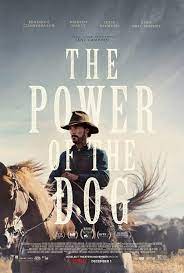
The Power of the Dog - 2021 film review


A few years ago Liz Gilbey recommended me to read Thomas Savage's novel The Power of the Dog, which was first published in 1967. I'd never heard of the book or the author and I was surprised when Liz told me that it was a superb crime novel - even more surprised when I bought a copy and started reading. But I soon realised that it's a terrific novel and that Liz's praise was well merited.

Now, more than fifty years after its first appearance, the book has been filmed, by Jane Campion no less. The lead character is the malevolent Montana rancher Phil Burbank and I must admit that if I'd been casting this part, I certainly wouldn't have thought of offering it to Benedict Cumberbatch. But I'd have been wrong. What a brilliant actor he is. Phil is a trick character to portray, but he does a great job.

On the surface, this is a Western, and I would not describe myself as a fan of Westerns (other than Butch Cassidy and the Sundance Kid). It's also a long film, a real slow-burner. The events of the book also move at a measured pace. I do feel that I enjoyed the film more because I'd read and loved the source novel. I felt Campion did Savage justice. It's an impressive piece of work.

I don't want to say too much about the storyline, but Phil and his amiable brother George (Jesse Plemons) are wealthy men who are very different but have a close relationship. That relationship is, in Phil's eyes, threatened when George marries Rose Gordon (Kirsten Dunst), a widow with a teenage son who is intelligent but not exactly macho. Kodi Smit-McPhee does a great job in the role of young Peter. It's a compelling story which is watchable and indeed gripping throughout - even if, like me, you usually prefer your stories to have a bit more pace. 


Friday, 17 June 2016

Forgotten Book - Enter Sir John

Enter Sir John was the first joint novel authored by two friends, the playwright Clemence Dane, and Helen Simpson. A brief foreword credits the publisher C.S. Evans for coming up with the idea of the collaboration and the story, which introduces the egocentric but appealing actor-manager Sir John Samaurez (real name Johnnie Simmonds). He appeared in two later novels by the pair before their literary partnership came to an end.

The story is set in the theatrical world that both authors, and in particular Dane, knew very well. Martella Baring is accused of murdering her unpleasant colleague Magda Druce, and the evidence against her seems to be damning. She is tried, found guilty, and sentenced to death, having done nothing to help herself when appearing in the witness box.

Sir John, who had previously met Martella and taken a shine to her, attends the trial and becomes convinced of her innocence. She continues to be reluctant to co-operate, in the gallant yet infuriating way of so many Golden Age suspects. But Sir John is undaunted, and eventually uncovers the truth. it has to be said that, as a detective story, this one is nothing special; the puzzle is perfunctory. The writing and characterisation (by the standards of the time) are what lift it out of the ordinary. The question of racism is also addressed,in a way that - again by the standards of 1929 - is quite thought-provoking.

The story was vivid enough to appeal to Hitchcock, who filmed it as Murder!, a movie I reviewed here more than four years ago. There are also elements which, as Liz Gilbey noted in a an excellent article for CADS a while back, anticipate a much better known book by a friend and Detection Club colleague of the authors - Dorothy L. Sayers, whose Strong Poison offers a cunning howdunit puzzle. Enter Sir John isn't as good as the Sayers novel, but it's interesting, nonetheless.

Wednesday, 20 June 2012

CADS 63


CADS 63, edited by the tireless Geoff Bradley, has just been published, and once again it’s packed with interesting and often esoteric information about crime fiction past and present, but predominantly past. I can’t remember a single issue – and I’ve read them all – when I haven’t been introduced to a book or author that I’ve enjoyed, yet otherwise might not have bothered with. The joy of CADS is that you have so many encounters with the unexpected.


These include – for instance – two assessments by John Cooper of a selection of books by writers who are today under-rated, Francis Beeding and Clifford Witting; this highlighted a number of books I’m keen to seek out. Tony Medawar contributes a nice little article about Jacques Futrelle, who died on the Titanic, and there are good pieces by a range of the usual suspects, including Bob Adey, Barry Pike and Liz Gilbey.


Curt Evans’ latest piece of mystery scholarship, an attempt to puzzle out which of the ‘joint’ books by G.D.H. Cole and his wife Margaret were written as solo efforts by one or other them inevitably depends on a mixture of logical deduction and guesswork,  but the arguments are well presented, and may be as close as we come to finding out the truth about this slightly odd collaboration. I'm looking forward eagerly to reading Curt's new book about three relatively neglected Golden Age mysteries - more about this in due course.


On a personal note, I was grateful for Chris Simpson’s review of Waterloo Sunset, and also to Geoff and to Bob Cornwell, for including me in their long running feature, the CADS Questionnaire. By their kind permission, the Questionnaire will also appear on the ‘interviews’ page of my website. But really, if you’re keen on the genre and its history, there is no substitute for buying the magazine. An absolute bargain, unreservedly recommended.    


Wednesday, 15 February 2012

CADS 62

I hesitate to say this, because the general standard is always so high, but the latest issue of CADS, edited by Geoff Bradley, is possibly as good as the best of any of its 61 predecessors. It’s absolutely full of great things (I admit these include Angela Youngman’s very kind review of The Hanging Wood) and if you like traditional fiction, you really will enjoy this magazine.

One of the glories of CADS is the sheer unpredictability of the content. There are things here you simply won’t find anywhere else. Contributors aren’t afraid to buck trends. For instance, B.J. Rahn ( a distinguished academic and expert on crime fiction) writes a thoughtful but severely critical piece about the highly popular Camilla Lackberg. Meanwhile Philip Scowcroft not only praises The Five Red Herrings (I don’t share Philip’s enthusiasm, suffice to say) in one article but also contributes another with the memorable title “Visits to Doncaster by Crime Authors” (in which I get a kind mention, and I must say how much I did enjoy my visit to Doncaster!)

Liz Gilbey, a wise and witty writer, contributes “the best of the blurbs” (e.g “A really thrilling thriller which deals cunningly with murder, death and hocus-pocus”, of a Ngaio Marsh title) and a fascinating article about Ian Mackintosh, of whom I’d never heard. Curtis Evans, that splendid researcher, has a nice article about T.S. Eliot as a crime critic, pointing out that Eliot was a pioneer in terms of setting out "rules of the game", while Mike Ripley covers C.S. Forester. My very first contribution to CADS, many years ago, was about Forester, but that was before the rediscovery of that marvellous book The Pursued. I was interested to see that Ripley’s views and mine on Forester’s excellence are pretty much identical.

There are countless other gems, including a short article by Arthur Robinson on Anthony Berkeley’s stage plays, and one by John Cooper on Michael Gilbert’s radio plays. Bruce Shaw casts fresh light on E.C. Bentley, while Bob Adey has unearthed rare articles by Henry Wade and others. Cooper’s article about Clifford Witting, a writer I’ve never read, made me want to read his books. Other expert contributors include Marv Lachman and Barry Pike. The TBR pile will mount! All in all, Geoff Bradley really has excelled himself. I can't wait for the next issue.

Monday, 3 October 2011

CADS 61


I've written before in praise of Geoff Bradley's marvellous magazine CADS, and the recent arrival of the latest issue is cause for celebration, as usual. Its appearance may be irregular, but the high standard of the contents is very regular indeed.

We have another nice mix of material again this time, with pieces from a range of excellent familiar contributors such as Liz Gilbey and Philip Scowcroft - the latter writes interestingly about the John Dickson Carr book I featured a while back, The Problem of the Green Capsule.

The highlight is the lead article, by Peter Lovesey, a very informative piece on the Detection Club. I had the pleasure of seeing a draft of this article, which Peter prepared for a lecture, and it's characteristically enjoyable. Peter's lecture, by the way, was the annual lecture for the Dorothy L. Sayers Society last March. I was asked to speak there myself, but had to pull out because of the day job. However, I'm glad to say that I've been invited to give the annual Sayers lecture next year, and I'm really looking forward to it.

Finally, Curt Evans has unearthed some fascinating correspondence involving J.J. Connington. I haven't yet read all of his article, since he kindly includes spoilers about revealing the solutions to a couple of Connington books I have yet to read. But as ever his research is intriguing and welcome.

Wednesday, 17 November 2010

The Long Memory revisited


After I posted about the film of The Long Memory, I was contacted by Liz Gilbey, a long-time contributor to CADS, who had written about the book previously. A very enjoyable correspondence has followed, and Liz has kindly supplied both the images above from the original book (the photo depicts the talented but now forgotten author Howard Clewes) and the following guest post about this very interesting story:

'Philip Davidson has served seventeen years in prison for a murder he did not commit. Released on parole, he hunts down the two people who lied and condemned him.

So far, so standard fare. But Howard Clewes wrote a crime masterpiece with this book, still fresh and exciting when read 59 years on. Little wonder it was compared to early Graham Greene when first reviewed.

There is a complication to what starts as a tale of revenge. One of the perjurors is married to a policeman who investigated the case. He has always had his suspicions.....and he is also the narrator of the book.

Inspector Lowther is not a hero nor is he an admirable man. He had his suspicions at the time of the murder, but quashed them; because he fell in love with Fay - Davidson's girlfriend - when investigating the case, and love made him blind.

But now Davidson is out seeking revenge, and the marriage has faded into inertia. Lowther fears for his wife, and his conscience is needling him about the miscarriage of justice, even though he had tampered with evidence to put Fay in a good light, and his career will be destroyed if this comes to light.

The book is psychologically rich and complex, dealing with love, marriage, injustice, people smuggling, displaced persons, poverty, social and industrial decay. The characters are strong, from the over conscientious reporter on the case to the harrassed wives. Even the dead man who turns out not to be dead at all. And the setting - the Thames estuary - has it's own grim identity.

Coming to the book from the film (increasingly being accalimed as a great British film noir) it is remarkable how faithful one is the the other - sometimes you have to check to make sure the book was indeed written first, for action and descriptions replicate wholesale, as if the author is directing and even casting the film. The only odd man out is John Mills as Davidson. Davidson is written as a hulk of a man, not the physically slight Mills (whose confidence building participation was part of a brave rush of films seen at the time as mere quota quickies to keep the British film industry alive.) But his characterisation is true and strong.

Story changes for the film strengthen and simplify some themes and accomodate the narrator's inner musings without detracting from the book.

Track down and enjoy the book, see the film. Both are true masterpieces, spare and strong.'

I've not yet read the book, but I certainly endorse Liz's views about the film. Thanks, Liz!


Sunday, 27 June 2010

Helen Simpson


One of the articles in the new issue of CADS, from regular contributor Liz Gilbey, provides a very interesting account of the Australian born Golden Age crime writer Helen Simpson, whose first detective story appeared in 1925, when she was just 28.

I learned a lot about Simpson from this article that I didn’t know before. She was an early, and youthful, member of the Detection Club, and contributed to The Floating Admiral, Ask a Policeman and Anatomy of Murder. But she did a good deal more. In 1926 she contributed dialogue to the Hitchcock film Sabotage, and a book she co-authored, Enter Sir John, was filmed by Hitchcock as Murder! After her death, Hitchcock also made a movie from her book Under Capricorn.

Enter Sir John was the firs of three novels she co-wrote with Clemence Dane (who, I was startled to learn, ‘was Britain’s most successful writer’between the wars. A year after the novel was published, Dorothy L. Sayers published Strong Poison, which had some similarities. Sayers was, in fact, one of her closest friends.

Sadly, Simpson died of cancer in 1940, at the age of 43. As Liz Gilbey says, she was ‘on the brink of greater writing success and a new political career’ – she was a Liberal parliamentary candidate from 1938. Her premature death no doubt helps explain why she is now seldom mentioned by crime fans, but this first class article made me want to read more of her work.

Wednesday, 2 June 2010

25 Great Years


CADS 58 has just been published and this marks 25 years of publication of a wonderful magazine. This milestone represents a triumph for editor Geoff Bradley, who has produced every single issue over a quarter of a century and established CADS as a truly unmissable publication for crime fans, especially for those fascinated by obscure and less well remembered books.

As usual, there are many, many good things in this issue (and also, I should declare, an article by me about Gory Knight, and a review of The Serpent Pool). I shall write on another occasion about Liz Gilbey’s informative article about Helen Simpson. An old article by George Bellairs about Sherlock Holmes and the Bankers has been unearthed, Nick Kimber writes about Hilda Lawrence (a writer whose Death of a Doll I much enjoyed) and other notable contributions come from Philp Scowcroft, Mike Ripley, Christine R. Simpson, Bob Adey and Marv Lachman.

Really, though, it verges on the invidious to single out particular items, because the contributors are both knowledgeable and enthusiastic. The letters column of CADS is always interesting, and so is The Questionnaire, in which Bob Cornwell puts questions to a leading writer – this time, Frances Fyfield.

Producing CADS is a labour of love. A great deal of hard work must be involved, but I can only hope that Geoff will keep the magazine going for many years to come. CADS is indispensable for the crime buff and I recommend it unreservedly to readers of this blog.