Showing posts with label Maxim Jakubowski. Show all posts

Wednesday, 22 July 2020

Bodies from the Library 3 - edited by Tony Medawar


Bodies from the Library 3 eBook: Medawar, Tony: Amazon.co.uk ...

I've mentioned Tony Medawar before on this blog as the leading researcher of obscure crime fiction. He's a great fan of Golden Age mysteries who has uncovered some fascinating material over the years. An example was the Agatha Christie competition story "Manx Gold", which fascinates me. Tony is currently developing a niche as an editor of story collections, including the Bodies from the Library series, which has now reached its third installment. In addition, he's become the supremo of the Agatha Christie International Festival in Torquay, an event I was eagerly anticipating until the pandemic intervened.

I have a vivid memory of my first encounter with Tony. It was at the London Bouchercon, way back in 1990, before I'd published a single piece of crime fiction. We happened to be contestants in a Mastermind quiz. The quizmaster was Maxim Jakubowski, himself a supremely prolific and versatile anthologist. The score was kept by Geoff Bradley, the editor of CADS. On that pleasant afternoon I never imagined that, thirty years on, Geoff, Tony, Maxim, and I would still be in regular contact, having all sorts of criminal conversations. These are three people from whom, in different ways, I've learned a lot.

The other contestants in the quiz, by the way, were Jim Huang, an American crime fan, and the writer Sarah J. Mason, who also took part with me in a re-run of the quiz at the 1995 Nottingham Bouchercon, along with two very knowledgeable Americans, Marvin Lachman and Edward D. Hoch. There is discussion about the quizzes in Marvin's admirable book The Heirs of Anthony Boucher.

Turning to Bodies from the Library 3, like its predecessors it is a mixed bag, with the main connecting link that most of the stories are unknown or little-known efforts by Golden Age writers. (Six stories are also linked by a theme: an orange that saves someone's life, of all things. Of these little tales, Ethel Lina White makes the best attempt to come up with a strong story.) I'd already come across a handful of the entries in the book, including an extremely good Agatha Christie, "The Incident of the Dog's Ball". There are extensive notes about the contributors, and I was especially pleased to learn more about the enigmatic Lynn Brock.

One of the best stories, I felt, came from that talented but rather inconsistent writer Christopher Bush. "The Hampstead Murder" is pleasingly different, and I really liked it. Bush wrote far too much, but this story shows just what he could do on a good day. There's also a story by Christopher St John Sprigg, which makes use of his interest in aeronautics, although this particular mystery is not in the same league as his novel with a similar background, Death of an Airman.

There are a couple of stories by American writers, and two plays, including one by Ngaio Marsh that was previously unknown to me. Although most of the stories have been published before, this was often in obscure magazines (as with the Bush story) and some have never previously seen the light of day.

It is interesting to speculate why this might be. For example, John Curran, who was the first to reprint the Christie story, theorised that she opted to use key elements of the plot for the novel Dumb Witness, and that seems highly plausible. Whatever the reason, it's a story that Poirot fans are sure to enjoy. The best discovery in the book is "The House of the Poplars" by Dorothy L. Sayers, and I'd be fascinated to know why it's never been printed before. While it's no masterpiece, it's certainly good enough to have been published. Did Sayers have reservations about it, possibly because the ending is slightly anti-climactic? Perhaps, but I'm really not sure. At least now, thanks to Tony, we have a chance to read for ourselves a lost story by one of the giants of the Golden Age. 


Wednesday, 15 July 2020

The Locked Cabin


The Book of Extraordinary Impossible Crimes and Puzzling Deaths ...

I've edited more than my fair share of anthologies - around forty - but there are two British anthologists who were putting together fascinating crime collections long before I started and who continue to do excellent work in the field. They are Mike Ashley and Maxim Jakubowski, two men whose remarkably wide knowledge of popular fiction extends far beyond the crime genre. Both of them have both been kind enough, over the years, to include occasional stories of mine in their books.

My latest short story is "The Locked Cabin", and it kicks off Maxim's new anthology, The Book of Extraordinary Impossible Crimes and Puzzling Deaths, published by Mango. The book is another entry in a series of collections Maxim has been putting together, which also includes a set of Extraordinary Historical Mysteries, to which I contributed "The Sound of Secrecy".

There's no doubt where the inspiration for this particular story came from. When I was wandering around the Queen Mary 2 last year, I read with great interest the wall panels detailing the illustrious history of the original Queen Mary, and one particular anecdote from the 30s sparked an idea in my mind. When I went on a second crossing on the ship, I gave the idea further thought and realised that it could make an interesting variation on the concept of the locked room mystery. So, not an entirely typical locked room riddle by any means, but a spin on the idea that appealed to me. When I arrived back in Britain, I set about writing the story.

There are some very interesting contributors to this volume, including a number of good friends of mine such as Christine Poulson, Amy Myers, Jane Finnis, Len Tyler, and Paul Charles, all of whom have a track record of successful short story writing. In recent times, I've also got to know David Quantick, who has enjoyed great success in TV with shows like The Thick of It and is now pursuing a long-standing interest in crime fiction. There's a good deal of variety in this book - it's by no means a conventional collection of stories in the John Dickson Carr vein - and quite a bit of experimentation. I'm glad to be part of it.


Wednesday, 26 June 2019

Writing "The Sound of Secrecy"


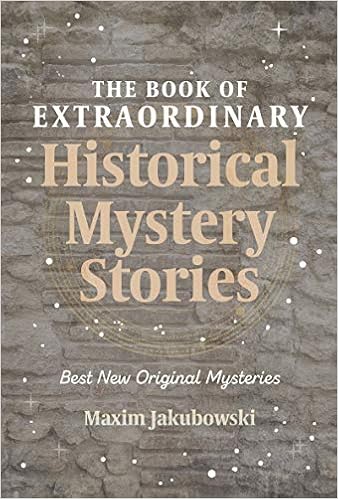
I've published a couple of new short stories recently. "The Girl on the Bandwagon" appeared in Ellery Queen's Mystery Magazine, and no prizes for guessing which branch of crime fiction it seeks to satirise! "The Sound of Secrecy" is to be found in a new anthology,  The Book of Extraordinary Historical Mystery Stories, published by Mango and edited by Maxim Jakubowski.

I came across the term "the sound of secrecy" last year, on a visit to Bletchley Park. It stuck in my mind, and I felt the urge to write a story about the war-time codebreakers of Bletchley. I had the beginnings of an idea, but it stubbornly refused to develop, which was frustrating.

Then Maxim announced the proposed publication of his book, and it sounded very appealing. Maxim has edited more than eighty anthologies, that is, more than twice as many as me, and he shares my love of the short story. In the past, he's included a number of my efforts in his books, and I told myself that the Bletchley Park story might find a very good home, if only I could breathe some life into it. 

The answer arrived unexpectedly. Last autumn, I went to St Helier to take part in a literary festival in Jersey, and had a little spare time, which enabled me to take a trip to Gorey and its splendid harbour and castle. Quite an inspirational place. Suddenly it struck me how I could write a story which shifted between wartime in Bletchley Park and the relatively recent past in Jersey. It was like finding a key to unlock a door.

Luckily for me, the story worked, and Maxim accepted it. I'm delighted to see "The Sound of Secrecy" appearing in his book alongside a host of good writers such as Sally Spedding, Kate Ellis, Linda Stratmann, Amy Myers, Jane Finnis, Michael Bracken and Paul Magrs. 

Monday, 2 October 2017

CADS 76

The arrival of a new issue of CADS is always a cause for celebration. Geoff Bradley's "irregular magazine of comment and criticism about crime and detective fiction" has now reached issue 76. That very irregularity is one of the pleasures of CADS - one never quite knows when the next issue will arrive, a touch of quirkiness that I find very attractive.

It comes as quite a shock to me to realise that I've known Geoff for 27 years. We first met at a memorable Bouchercon in London in 1990. I'd read that there was to be a quiz about crime fiction, so I expressed an interest. What I hadn't realised was that it was to be closely modelled on BBC TV's Mastermind, and when I said that my special interest was "detectives", that meant the questions in the special round ranged far and wide. Geoff kept score, and Maxim Jakubowski set the questions. I'd never met Maxim until then either - now he is one of the CWA's two Vice Chairs and I am the Chair. Who would have predicted that? Not me.

One oft the other three contestants (the others were Sarah J. Mason, a writer with whom I'm still in touch, and Jim Huang from the States) was Tony Medawar. Tony is someone else I'd never met before that day. Since then, I think I've learned more from his researches than from the research of any other Golden Age fan, with the possible exceptions of John Curran and Barry Pike. In CADS 76, Tony is at it again, with a terrific article about "the lost cases of Lord Peter Wimsey". For any Sayers fan, that is a must-read.

As usual, there is plenty of other good stuff. Pete Johnson writes about Andrew Garve, and Barry Pike about Reggie Fortune, while Kate Jackson, who has emerged in recent times as a prolific and interesting blogger, contributes a thoughtful article about mystery fiction and individualism. Liz Gilbey and John Cooper are among a range of other knowledgeable contributors, and I was especially pleased to read John's discussion of the books of Kay Mitchell. Kay's an old friend of mine who has not published a book, sadly, for a very long time, but her work is definitely worth seeking out. I have to confess that three books of mine are reviewed in this issue, but I can promise you that isn't why I recommend this magazine. Over the years, CADS has made a contribution to research about the genre that is both unique and invaluable.

Wednesday, 20 January 2016

The Edgars


The Golden Age of Murder has been nominated for an Edgar, one of the long-established awards given by the Mystery Writers of America. It's one of five books in the "best critical/biographical" category. Of course, I am delighted. I've been shortlisted for a few awards previously, in my writing and legal careers, and actually managed to win one or two, but of course something as significant as an Edgar nomination comes along rarely if ever in a British writer's life. So the key thing is to savour the moment to the full, which is exactly what I'm doing right now....

I see that, at the Edgar Awards ceremony which is to be held in New York City, that fine writer Walter Mosley is to be acclaimed as a Grand Master. This reminds me that, way back in 1992, when my first novel, All the Lonely People, was one of seven initially shortlisted for the CWA John Creasey Memorial Dagger for best debut crime novel of the year, the award was won (and deservedly so) by Walter for that terrific book, later filmed, Devil in a Blue Dress.

But here's the thing. I didn't even find out that my book was one of the seven nominated books until months after the event. In those days, there was no Twitter, no Facebook, no social media alerting one to such news. The first I heard about it was one day when I was visiting London and I called in at Murder One, the splendid crime bookshop that Maxim Jakubowski used to run in Charing Cross Road. He congratulated me on being shortlisted (Maxim was, and remains, a very well-informed chap, and is nowadays a colleague on the CWA committee), and it came as a complete bolt from the blue. By that time,though, the award ceremony had come and gone. Just shows how things have changed....


Saturday, 19 December 2015

Blue Serge

"Blue Serge" is a new short story of mine, which has just appeared in an anthology compiled by the tireless Maxim Jakubowski. The title of the collection, published by Robinson, is The Mammoth Book of Jack the Ripper Stories, and the numerous other contributors include Barbara Nadel, Peter Guttridge, and Michael Gregoriou.

My story has a connection with a real life case other than the Ripper murders - the almost equally famous case of Hawley Harvey Crippen, and features one of the leading characters from the Crippen case. I've long been intrigued by both cases, and I really enjoyed writing this particular story.

I tried to stick to the facts of the Ripper case so far as they are known, but in an afterword to the story, I explain that the part of it which pins villainy on a particular person is very much the product of my imagination. That individual is long gone, and I don't think anyone would have a moment's doubt that this is a work of fiction, solely intended to entertain. I'm conscious, however, that stories often represent long-dead people as misbehaving in all sorts of ways which have in fact been invented. To my mind, it's important to spell out the fact that they have been invented. Otherwise - especially in film screenplays which claim to be faithful to the facts, but which actually take liberties with them -  reputations can be posthumously damaged without cause.

My thanks go to Maxim Jakubowski, who has edited a great many anthologies and included stories written by me in quite a number of them. Unless you've edited an anthology yourself, you tend to under-estimate how much hard work is involved. I take my hat off to the likes of Maxim and Mike Ashley, and in the US Otto Penzler, who have produced so many anthologies of such high calibre. Long may they continue to do so.


Wednesday, 14 October 2015

The Adventures of Moriarty - edited by Maxim Jakubowski

Tomorrow sees the publication of a new, nicely packaged, and very substantial collection of stories edited by Maxim Jakubowski. Its full title is The Mammoth Book of the Adventures of Moriarty, and its tag line "The Secret Life of Sherlock Holmes' Nemesis". The book is published by Robinson, whose Mammoth series has proved so popular over the years.

As a lifelong fan of Conan Doyle, Sherlock and Moriarty, I'm pleased to say that I have a story in this book, and in a way, it brings my ventures into Sherlockiana full circle. Back in 1997, Robinson published a collection edited by Mike Ashley, who is, like Maxim, a real expert as well as an industrious compiler of first-rate anthologies. The Mammoth Book of the New Adventures of Sherlock Holmes included my very first Sherlockian pastiche, "The Case of the Suicidal Lawyer".

Writing that first story gave me a taste for further occasional ventures into Sherlockiana, and led ultimately to my producing  The New Mysteries of Sherlock Holmes,
an ebook collection of six Sherlock stories with various bonus items which is available on various Amazon sites, in the UK, US, and elsewhere. I've been gratified that this collection has sold well since it came out last year, and continues to do so.

Writing a story focusing on Moriarty represented a slight change of tack, of course. I had a lot of fun writing "The Case of the Choleric Cotton Broker", and it touches on two famous real life criminal cases. I rather feel that it's the best of my pastiches to date, and I'll be interested to see the reaction to it. In the meantime, I'm really looking forward to diving into Maxim's anthology. Fellow contributors include Len Tyler, Michael Gregoriou, Alison Joseph, Jurgen Ehlers, Barbara Nadel, Cilla Masters, Christine Poulson and...well, the list goes on. Some great reading lies ahead.

Thursday, 12 June 2014

Three New Books

Today I'd like to draw your attention to three very varied new books which, taken together, should appeal to a wide range of tastes. The first is a collection of short stories, The Mammoth Book of Best British Crime 11, edtied by Maxim Jakubowski and published by Robinson. It's dedicated to the late Bob Barnard and Nick Robinson, and contains a very wide range of stories, including one by me. More famous contributors include Lee Child, Val McDermid, Alexander McCall Smith and Simon Kernick. Maxim is a very widely read fellow, and I've enjoyed devouring his collections for many years. If you like short stories, it's a terrific compilation.

I've been singing the praises of Priscilla Masters for about fifteen years now. She is an under-rated writer of traditional mysteries, and her latest,The Devil's Chair, has just been published by Severn House. Cilla is best known for her books about Joanna Piercy, but this is an entry in her equally appealing series featuring Martha Gunn, who is a coroner. The setting is Shropshire, and I think it's fair to say that Cilla evokes the mysterious atmosphere of that green and pleasant, yet sometimes eerie county better than any other crime writer with the distinguished exception of Ellis Peters. Cilla has beaten me to it in retiring completely from her day job, and I hope this means that we'll see even more of her fiction in the future.

Finally, a first novel by a writer whom, unlike Maxim and Cilla, I've never met. The Vistiors, by Simon Sylvester, is published by Quercus and is set on a remote Scottish island called Bancree. Why are some people mysteriously disappearing from Bancree? This is a book which doesn't really fit into the conventional pigeon-hole of detective fiction, but it's nicely written, and reflects the vogue for books set on Scottish islands, a fashion perhaps inspired by the great success of Ann Cleeves and Peter May. I think Simon Sylvester will be a name to watch in years to come.

Monday, 7 October 2013

Ellis Peters and Wellington Literary Festival

This year sees the centenary of the birth of Edith Pargeter, better known to crime lovers as Ellis Peters, the creator of Brother Cadfael. Although she often travelled abroad, set many books overseas, and was a noted translator of works written in Czech, she was first and foremost a woman of Shropshire, the county where she was born and spent nearly all her life, and which featured in many of her best books. Pleasingly, Wellington Town Council in Shropshire decided to celebrate her at its Literary Festival this year and I was honoured to be asked to be the guest speaker, discussing her life and work.

I imagine the invitation stemmed in part from the fact that I edited a collection of obscure Peters stories for a book published by Crippen and Landru some years ago, The Trinity Cat, and in part from the fact that I've written about her work on a few occasions, for instance in Following the Detectives, edited by Maxim Jakubowski. So I was glad to accept, although as I journeyed down the M6 to Wellington through ghastly traffic, I reflected that travel hasn't improved as much as it should since Cadfael journeyed around in the twelfth century.

One thing that impressed me enormously was the venue for the Festival. This is a large and recently built leisure centre which includes a public library, and much else besides. The very pleasant town councillor who introduced my talk was clearly proud of the centre, and quite right too. This is exactly the sort of project that provides tremendous benefits to a community, and my impression was that the facilities are well used and much appreciated.

Putting a library together with other leisure resources may sometimes be complicated and far from cheap, but the social dividends can be hugely rewarding if it is done well (in a more modest way, it's been done in my home village,Lymm, and again the results have been admirable.) In the 21st century, when maintaining social cohesion is, in many ways, as important as ever it has been, a high calibre venue such as this brings people together and ensures that events like the Literary Festival are not only possible but likely to be successful and greatly valued.

The festival committee had certainly done a good job in getting an eclectic list of speakers: it's not often that Germaine Greer and I are metaphorically rubbing shoulders in the same programme. Although I've visited nearby Ironbridge before, I 'd never stopped in Wellington previously, but I was really struck by what the local people, and their authority, have created. And I'm sure Edith Pargeter would have been impressed as well.

Wednesday, 27 February 2013

Another Mammoth!

The Mammoth Book of Best British Mysteries volume 10 is quite a mammoth title, and the book itself is nearly 600 pages long, so at £7.99 for a chunky paperback, it really represents good value. I hasten to add, though, that I am one of the contributors, so I don't claim to be totally unbiased. But Maxim Jakutbowski, the editor, is someone whose breadth of reading in the genre is genuinely impressive, so I'm confident that even the most hard-to-please crime fan will find plenty to enjoy among the 42 stories collected here.

My contribution is a story called "Squeaky". The plot drew one or two elements from a well-publicised real life case, but naturally the events and characters in the story are very different from those in the case in question. I must say that, of all the short stories I've written, "Squeaky" is right up there along with those which I feel worked best.

"Squeaky" first appeared in Guilty Consciences, the CWA anthology I edited in 2011, and a good many stories from that volume also feature in Maxim's collection, which I guess helps to explain why I like it! A number of stories from Best  Eaten Cold, the Murder Squad anthology, also appear. But I hasten to add that Maxim has also ranged very widely to include stories from the likes of Lee Child (with Sherlockian references!), Peter Turnbull (a very reliable writer who deserves to be better known), Neil Gaiman and Stella Duffy.

In his introduction, Maxim suggests that this may be the last in the current series. As he says,a decade is a very good run for an anthology, but it will be a pity if there are no successors. He does drop a hint that there may be positive news of some kind at a future date. The reality is that short story volumes are not popular with many publishers. But I am convinced that in these days of short attention spans, digital publishing offers great potential for the short story form and its writers. So, overall, I am optimistic. In the meantime, this traditionally published book is one that I am very glad to be associated with.

Saturday, 21 January 2012

Short Stories

"Clutter", a short story I wrote for the CWA anthology Original Sins, is due to be published shortly in the latest volume of The Mammoth Book of Best British Crime edited by the tireless Maxim Jakubowski. It's one of my darkest stories, it has to be said, very different in tone and subject matter from, say, the Harry Devlin books or the Lake District Mysteries. But the central idea seemed to me well suited to the short form.

A fellow contributor is Nigel Bird, whose Sea Minor blog features on my blogroll, and he kindly invited me to answer a few crisp questions about short stories.

A word about that marvellous short story "The Lottery". By coincidence, this morning I've received from that excellent bookseller Jamie Sturgeon a copy of a book by Shirley Jackson in which she describes the baffled reaction to that amazing story after it first appeared in The New Yorker. She makes many thoughtful comments about both writing and reading that also have a bearing on some current discussions about reviewing on the blogosphere. Fascinating topic,and one I'll return to in future.

Tuesday, 24 May 2011

More on Crimefest


I'm working away from home for a couple of days, so just a few more brief thoughts on Crimefest for the time being.

I enjoyed moderating two panels, the first being Forgotten Authors, with some great panellists - Adrian Magson, Peter Guttridge, Caroline Todd and Sarah Rayne. There was so much to say about our chosen authors of the past - the only problem was that we could have talked for hours! I've been asked by the organisers to moderate the same panel again next year.

I also moderated an interesting panel which featured the very witty Caro Ramsay, along with M.R. Hall, Yrsa Sigursdottir and John Lawton. A varied group and a discussion which I felt was full of thought-provoking contributions. I was glad to meet John and Yrsa for the first time.

Two of the people I enjoyed chatting with at different times during the weekend deserve particular congratulations. Len Tyler won the Last Laugh award, and Paul Johnston, despite much modest self deprecation, won Mastermind in the face of formidable competition. Both Len and Paul have new books out shortly and I look forward to reading both of them. A word of appreciation too for Maxim Jakubowski, an extremely able quizmaster and question setter.

Monday, 10 January 2011

Italian Noir and Surviving Midsome


Having recorded the BBC4 programme on Italian Noir crime fiction just before Christmas, I’ve finally watched it, and I did find it interesting, even though I was much less familiar with the authors discussed than with the Scandinavian writers who featured in Nordic Noir, which I talked about recently. The talking heads included Maxim Jakubowski and Barry Forshaw, who are both articulate commentators and very knowledgeable about Eurocrime.

Predictably, the major contemporary writers Camilleri and Lucarelli were considered, and interviewed, and I found myself tempted to try their work – perhaps Camilleri’s in particular. But I was especially interested in mention of a writer from the inter-war years, Carlo Gaddo, whose book That Awful Mess on the Via Merulana sounded quite fascinating. I do think that crime novels of the past often cast a very significant light on crime novels of the present, and Gaddo’s book sounded well worth acquiring. I’d be interested to hear from anyone who has read it.

I’ve also watched Surviving Midsomer, an entertaining account of mayhem in the long-running Midsomer Murders series. The TV version derives from books written by Caroline Graham, a very amiable author whom I met a number of times in the 90s, but who (I think) is not at present writing any more crime fiction, no doubt in part because the massive success she has achieved has removed any financial need to do so.

I enjoyed Caroline’s early books very much, and although I gave up on the TV series after a year or two, I do think that the formula that was devised, with witty methods of murder, attractive locations and the very agreeable performances of John Nettles as Barnaby, made the shows effective light entertainment. And this spin-off programme encouraged me to watch a bit more of the Midsomer saga.

Wednesday, 15 September 2010

100 Great Detectives


Over the years, I’ve contributed to quite a number of reference books about crime fiction, including The Oxford Companion to Crime and Mystery Writing, edited by Rosemary Herbert. But the very first book for which I wrote an essay about the genre was 100 Great Detectives, edited by Maxim Jakbowski.

My subject was an amateur sleuth whose few cases I have much enjoyed, This was Francis Pettigrew, created by Cyril Hare. He is a barrister, who becomes involved in mysteries against his will. The classic Pettigrew case is A Tragedy at Law, a unique masterpiece, but all of Hare’s books are worth reading. They have stood the test of time pretty well.

The idea of the book in a nutshell was that each detective would be the subject to an essay by a crime writer or critic who was enthusiastic about the particular character. The concept worked very well, I thought. The variety of styles of the essays is a part of the book’s charm.

Of course, the snag with such a book is always that some deserving detective characters are bound to be left out. Even so, the coverage was wide and eclectic. Not surprisingly, Maxim won an Anthony Award for the book. It has a quirky charm, but it’s also packed with fascinating material by a remarkable range of contributors.

Saturday, 11 September 2010

Following the Detectives


I’ve mentioned previously that I’ve contributed a couple of essays, on Ellis Peters’ Shropshire and Inspector Morse’s Oxford, to a forthcoming book edited by Maxim Jakubowski, dealing with real life scenes of fictional crime. Two subjects I found very agreeable to research as well as write about. Marvellous, contrasting, yet each very English.

The book is due to come out on 25 September, published by New Holland Press, and I’m looking forward to reading the other contributions. All the more so as the authors are a distinguished list – I feel as though I’m in the best company.

This comes as no real surprise though, as Maxim has a knack of compiling very good books. I’ve had the pleasure of contributing to a number of them, and on another day I’ll write about a long ago volume called 100 Great Detectives for which I wrote an essay.

Here’s what the blurb has to say about the new book: ‘Whether it be the London of Sherlock Holmes or the Ystad of the Swedish Wallander, Dashiell Hammett's San Francisco or Donna Leon's Venice, the settings chosen by crime fiction authors have helped those writers to bring their fictional investigators to life and to infuse their writing with a sense of danger and mystery. "Following the Detectives" follows the trail of over 20 of crime fiction's greatest investigators, discovering the cities and countries in which they live and work. Edited by one of the leading voices in crime fiction, Maxim Jakubowski, each entry is written by a crime writer, journalist or critic with a particular expertise in that detective and the fictional crimes that have taken place in each city's dark streets and hidden places. The book includes beautifully designed maps with all the major locations that have featured in a book or series of books - buildings, streets, bars, restaurants and locations of crimes and discoveries - allowing the reader to follow Inspector Morse's footsteps through the college squares of Oxford or while away hours in a smoky Parisian cafe frequented by Inspector Maigret, for example.'

Saturday, 29 May 2010

Convention reflections


For the last in my series of posts about Crimefest, I’d like to reflect on the appeal of crime fiction conventions, perhaps especially for the benefit of any readers of this blog who have not attended such a convention, and wonder whether they would enjoy such an event, or whether they would feel a bit isolated.

My first crime convention was 20 years ago this autumn – the Bouchercon that was held in London. At the time, I had not enjoyed any success whatsoever as a crime writer, although I had joined the Crime Writers’ Association on the strength of writing and reviewing about the genre. I knew a few of those who attended, but not many. However, it was an eye-opening experience. Among many others, I got to meet Patricia D. Cornwell, who had just published her first novel, Maxim Jakubowski, Geoff Bradley of CADS and the great Golden Age expert Tony Medawar. I’m still in regular contact with Maxim, Geoff and Tony – not Patsy Cornwell, though, alas!

The event was so much fun – even for someone who is not naturally very sociable, like me - that I was hooked, and since then I’ve attended conventions in various different parts of the UK, as well as at Toronto, Seattle, Philadelphia, Las Vegas and Washington. I don’t claim that every event has been perfect, but each time I have met pleasant people for the first time, and had the chance to renew existing friendships. As well as to talk crime long into the night with like-minded people on countless occasions. Can’t be bad, can it?

And here are some photos from Crimefest featuring some of those people whose company I've shared with such pleasure. The first photo shows me with Mike Stotter, editor of that great online magazine Shots, followed by blogger Peter Rozovsky, top crime fiction guru and reviewer Ali Karim, and finally the Monkey Coalition pub quiz team: Carol, Ann, Karen, Cath, me and Rik. Photos courtesy of Ali, Mike and Karen.

Thursday, 27 May 2010

Questions and Answers


For me, the final act of the hugely enjoyable Crimefest 2010 was, as last year, the Criminal Mastermind quiz. The organisers of Crimefest kindly gave me a free pass to the convention on the condition that I returned to ‘defend the title’ that I won last year. My fellow contestants were Peter Guttridge, Ali Karim and Cara Black, and the quizmaster was Maxim Jakubowski.

The format of Criminal Mastermind follows closely the format of the TV show. You have two minutes each on your chosen special subjects in round one, and two minutes on general crime fiction questions in round two. As with exams and crosswords, there is a bit of a knack to it, which is why it is always more difficult for American contestants who haven’t seen the programme. I’ve been involved with four Mastermind quizzes over the years, and each time I’ve appreciated the American contestants’ willingness to have a go at something unfamiliar – not an easy task, especially in that famously menacing black chair, with the lights dimmed and in front of a large audience. You can see us all twitching in the photo before the ordeal began!

The first Criminal Mastermind took place at the London Bouchercon in 1990 – that was where I first met Maxim – and the second at the Nottingham Bouchercon in 1995. I won in 1990, and was runner-up in Nottingham, where the contestants included that marvellous American writer, the late and much lamented Edward D. Hoch.

One alarming feature of the entire week-end was the number of people who came up to me and predicted that I would win. Their faith may have been gratifying, but I couldn't help feeling daunted. My chosen subject was the crime writing of Julian Symons, and various people asked if I had re-read his work in preparation. In fact, I didn’t re-read any of it, since surely nobody setting a quiz would ever plough through the whole body of work - you can have too much information! So I assumed I could get away with relying on my long-standing enthusiasm for one of the great British crime writers. Doing a quiz is a bit like doing an exam – you just have to stay calm and focused and not worry about the things you don’t know, of which - as in life - there are always far too many. Happily, it all worked out and I’ll be receiving an inscribed Bristol glass tankard by way of commemoration. But next year, I’ll be very happy to sit in the audience instead of in the dreaded black chair and watch others suffer!

Wednesday, 26 May 2010

Mike Hodges and John Curran


Two highlights of Crimefest for me were first meetings with two men whose work I admire for very different reasons. One of the advantages of spending a bit of time in the bar at conventions is that you meet some very interesting people, and this was never more the case than when Maxim Jakubowski and his wife introduced me to Mike Hodges, whose first novel is being published by Maxim’s new imprint.

Mike Hodges is, of course, the legendary film director whose masterpiece is Get Carter. I’ve mentioned before in this blog that Get Carter is in my opinion one of the finest British crime films ever made, and it was a real pleasure to have a lengthy chat with Mike, who at 77 is a lively and entertaining companion. He told me a bit about his working relationship with Roy Budd, who composed the brilliant score for the film. He also mentioned that his fee for the film was a princely £7000. Not much for creating a classic, even allowing for inflation.

I also met up with John Curran, author of the wonderful Agatha Christie’s Secret Notebooks. I’d been listening to Marcel Berlins, a top crime reviewer, interviewing John and Matthew Pritchard, Agatha’s grandson, whom I’ve met a couple of times before. John, Matthew and I then had lunch together – for a Christie fan like me, this was a terrific experience.

I was glad to hear that John is bringing out a follow-up to his book next year. And very interested to learn that he has given up his job to do a PhD on Christie and other Golden Age writers. To spend your time having a wonderful excuse to read classics of the genre! It sounds enviable to me. But John deserves it; he has done crime fans a real service with his original work on the notebooks, which not only expand our knowledge of Christie, but cast light on the plotting process in a way that is hugely thought-provoking.

Monday, 24 May 2010

Crimefest 2010


I returned yesterday afternoon from a thoroughly enjoyable trip to Bristol, and I think everyone shared the view that Crimefest 2010 was a highly successful event. Congratulations are due to the hard-working team of volunteers who make sure that things go so smoothly, a tricky task accomplished with good humour and efficiency.

The superb weather was an added bonus and I took the opportunity to have a look round some parts of Bristol within walking distance. It's a rather appealing city, and one that, surprisingly, has not been featured too often in crime fiction.

Right from the outset I also had the chance to catch up with a number of old friends - within minutes of arrival, I found myself in the company of first Ruth Dudley Edwards, Linda Regan and Brian Murphy, and then Ali Karim, Maxim Jakubowski and Neil White. And the social aspects of the convention continued throughout the week-end, right down to the journey home with Kate Ellis, who kindly presented me with a copy of her latest book, The Flesh Tailor, about which more at a future date..

On Friday evening, a pub meal at The Green House, conveniently located opposite the convention hotel, was followed by a quiz set by Peter Guttridge. Our team, the Monkey Coalition, ran out winners despite struggling with various questions, especially about film. It was a very convivial occasion, and my colleagues were Rik and Carol Shepherd, Karen Meek, Ann Cleeves and Cath Staincliffe. Our prizes were a choice of books, cds and dvds, and I’m hoping that audio versions of books by Peter Robinson and Lee Child will improve my commutes in the weeks to come.

Wednesday, 21 April 2010

Following the Detectives in Oxford


Last week-end I returned to Oxford, subject of the second of my essays for Maxim Jakubowski’s forthcoming book on scenes of crime fiction, Following the Detectives. In the April sunshine, the city of dreaming spires was looking at its photogenic best.

One of the most intriguing developments in Oxford’s recent past is the transformation of the city prison into a luxury hotel. It featured in an episode of Lewis a while back. The castle is also accessible nowadays, and for the first time ever I had lunch there, and also climbed the castle mound, which commands rather good views of the city centre.

Wandering around The Parks, and some of the college quadrangles, I was reminded of the pleasures of watching Inspector Morse, and of course the books of Colin Dexter are extensively referenced in what I wrote for Maxim’s book. There are, however, a good many other writers who have set crime novels or short stories in Oxford. I was even responsible for one of them myself. ‘The Mind of the Master’ is set in 19th century Balliol, and introduces the legendary Master of Balliol, Benjamin Jowett as a a sort of proto-Sherlock Holmes.

Over the week-end there was a folk festival in Oxford, and the city centre was full of Morris dancers. I know of at least one very successful crime writer who is a Morris dancer, and I believe that Morris dancing featured in at least one of the novels written by Gladys Mitchell. It’s a curious English tradition which, to judge from the enthusiasm on display in Oxford last Saturday, is in no danger of dying out. So – who will write the next Morris dancing murder mystery?