Showing posts with label Inspector Charlton. Show all posts

Friday, 17 April 2020

Forgotten Book - Murder in Blue


clifford witting - murder in blue - AbeBooks

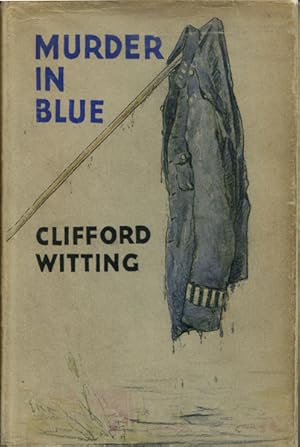
Murder in Blue, published in 1937 by Hodder & Stoughton, was the first detective novel of Clifford Witting. It was an auspicious debut, proclaimed by Hodder as "a first-class detective story...about the murder of a policeman". It's interesting to compare the first edition of this book with first editions written by debut authors today. Now, readers are always presented with information about the author. Publishers are keen, almost to the point of obsession sometimes, to focus on an author's "platform", i.e. the means by which, it's thought, he or she can attract readers. It was very different in 1937. We are not told a word about Witting.

So who was he? I don't possess a lot of biographical information but I do know that Clifford Witting (1907-68) was educated at Eltham College and worked for many years for Lloyds Bank. He enjoyed a long career as a crime novelist, spanning 27 years, but was much less prolific than many others who started during the Golden Age. In that time he published sixteen novels. Quite possibly, like Cyril Hare for instance, his day job reduced his literary output. But lack of productivity is no bad thing if it is matched by a corresponding increase in quality. He wrote accomplished traditional mysteries and in 1958 he was elected to membership of the Detection Club, a sign of the esteem in which he was held by fellow practitioners.

Nick Fuller writes about Witting on the excellent gadetection site, and asks why he is so obscure, given the engrossing nature of his stories. It's a good question. I missed out on Witting for many years and it was only because of the advocacy of Nigel Moss, an excellent judge, that I sampled him. I'm glad I did, because all the books of his that I've read have merit.

Narrated by a likeable bookseller, John Rutherford, and set in a thinly disguised Sussex, Murder in Blue introduced Detective Inspector  Charlton, who was to become a series character. There's more focus on characterisation and setting than you find in, say, most of the Freeman Wills Crofts books, and definitely more humour. Witting was witty! The story begins extremely well thanks to Witting's smooth narrative style, although I felt it sagged in the later stages. Overall, however, a decent start to a career of under-valued accomplishment.

Friday, 23 August 2019

Forgotten Book - Midsummer Murder


Image result for clifford witting midsummer murder

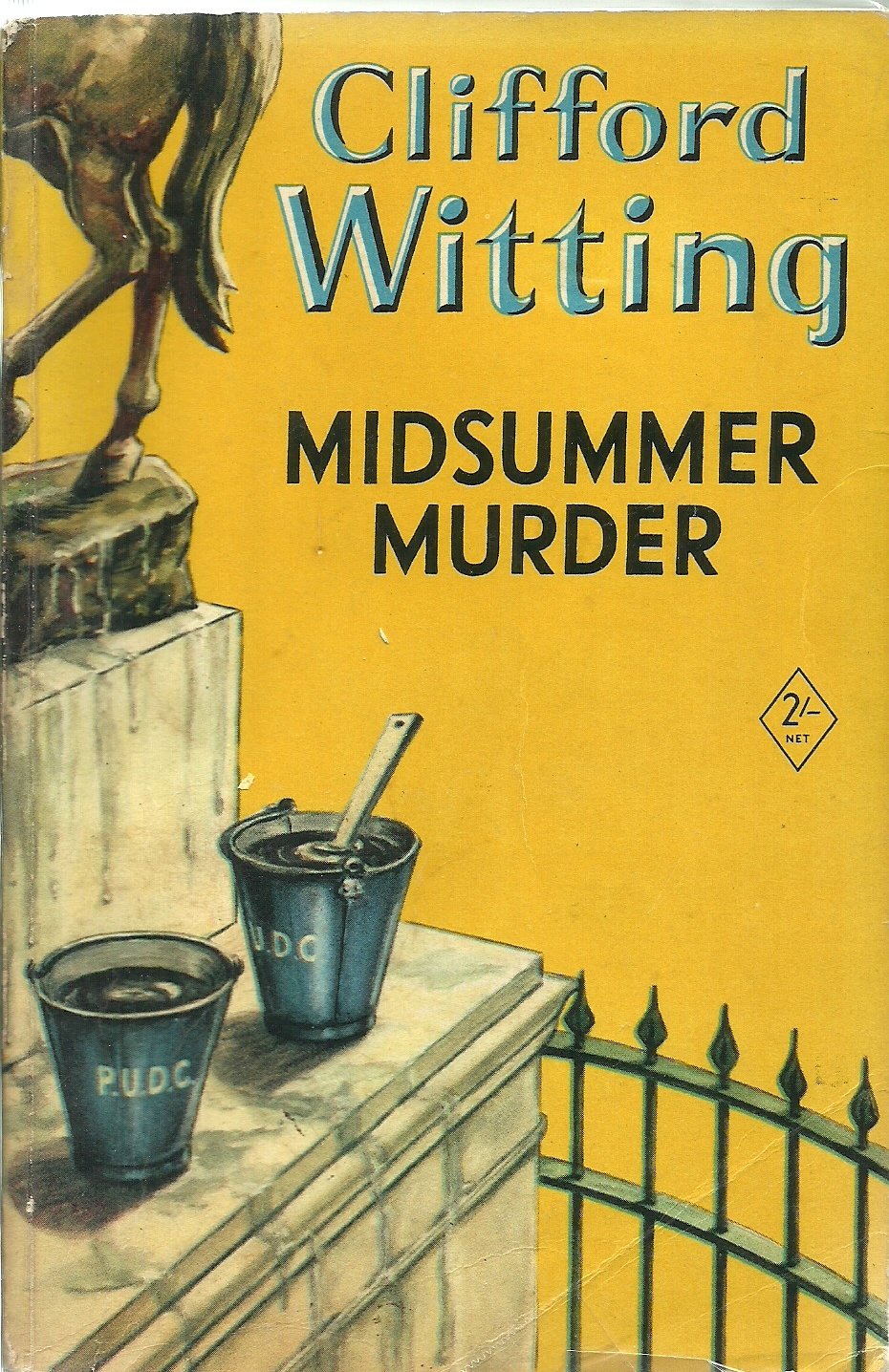
I've read a couple of books by Clifford Witting, which I'd rank as very competent Golden Age stories, towards the top end of the second division. And now I've devoured Midsummer Murder, his second novel, which I found extremely enjoyable. It's a story about a series of sniper killings in a small town, and it comes complete with map of the crime scene and an ironic reference to the Detection Club in the very last sentence.

Witting was a witty writer, and occasionally he overdoes the facetiousness. There's also a bit too much authorial  intervention for modern tastes (although that amusing final sentence makes up for it, in my opinion). But I'd say that he is a writer whose work is likely to appeal to anyone who is a fan of George Bellairs. And on the basis of what I've read, I'd add that he's the superior crime novelist. Indeed, twenty years after his jokey reference to the Detection Club, he was elected to become a member.

The story begins, I was pleased to note, on my birthday, in July, in the tranquil setting of Paulsfield, soon to be tranquil  no more. A workman is shot while cleaning a statue in the town square, an extraordinary crime which is apparently motiveless. For a long time I wondered if we were looking at a riff on The ABC Murders. I don't think it's a spoiler to say that this is not a book of that kind, and although (I choose my words with care) some readers will quibble about the slenderness of the connecting link between the deaths that plague Paulsfield, that didn't spoil my enjoyment.

Indeed, a great pleasure of this book is the characterisation, which is consistently amusing and appealing. Among the cast is a widow whose voluminous card index system contains masses of information about the local inhabitants. Inspector Charlton and Sergeant Martin make a likeable investigating duo, and although the book is perhaps a little longer than it needed to be, it held my interest from start to finish. Recommended.

Friday, 8 April 2016

Forgotten Book - Measure for Murder

My Forgotten Book for today is Clifford Witting's Measure for Murder. Witting's name isn't well-known these days, but he retains a number of admirers, and those picky (and knowledgeable) critics Jacques Barzun and Wendell Hertig Taylor rated this particular novel a classic, including it in a series of fifty crime classics from the first half of the twentieth century.

Witting's series detective, Inspector Charlton, makes an appearance in this book, but not until half way through. The structure is unusual. We are told about the discovery of a murder at the start of the book, but then we go back in time and follow a story told by Vaughan Tudor, which sets the scene for the crime.

Tudor is quite a likeable character, and he describes how, after an unsatisfactory spell as a bank clerk, he became an estate agent in a small town, and involved himself in the activities of a newly formed amateur dramatic society. The society gets off to a good start, but tensions mount as Tudor, and one or two of his colleagues, become enamoured of a very attractive actress. Preparations for the staging of Measure for Measure are disrupted by several untoward incidents - and then murder is committed.

The book is set just before, and just after, the start of the Second World War,and I was interested by Tudor's account of small town life at that troubled period of our history. The murder mystery, however, I found less satisfactory. There are too many characters, and the story felt very cluttered. I also found the motive and identity of the culprit less than totally convincing. But Witting's prose is light and agreeable, and he eventually earned membership of the Detection Club.